


Now she wants to choose your news.
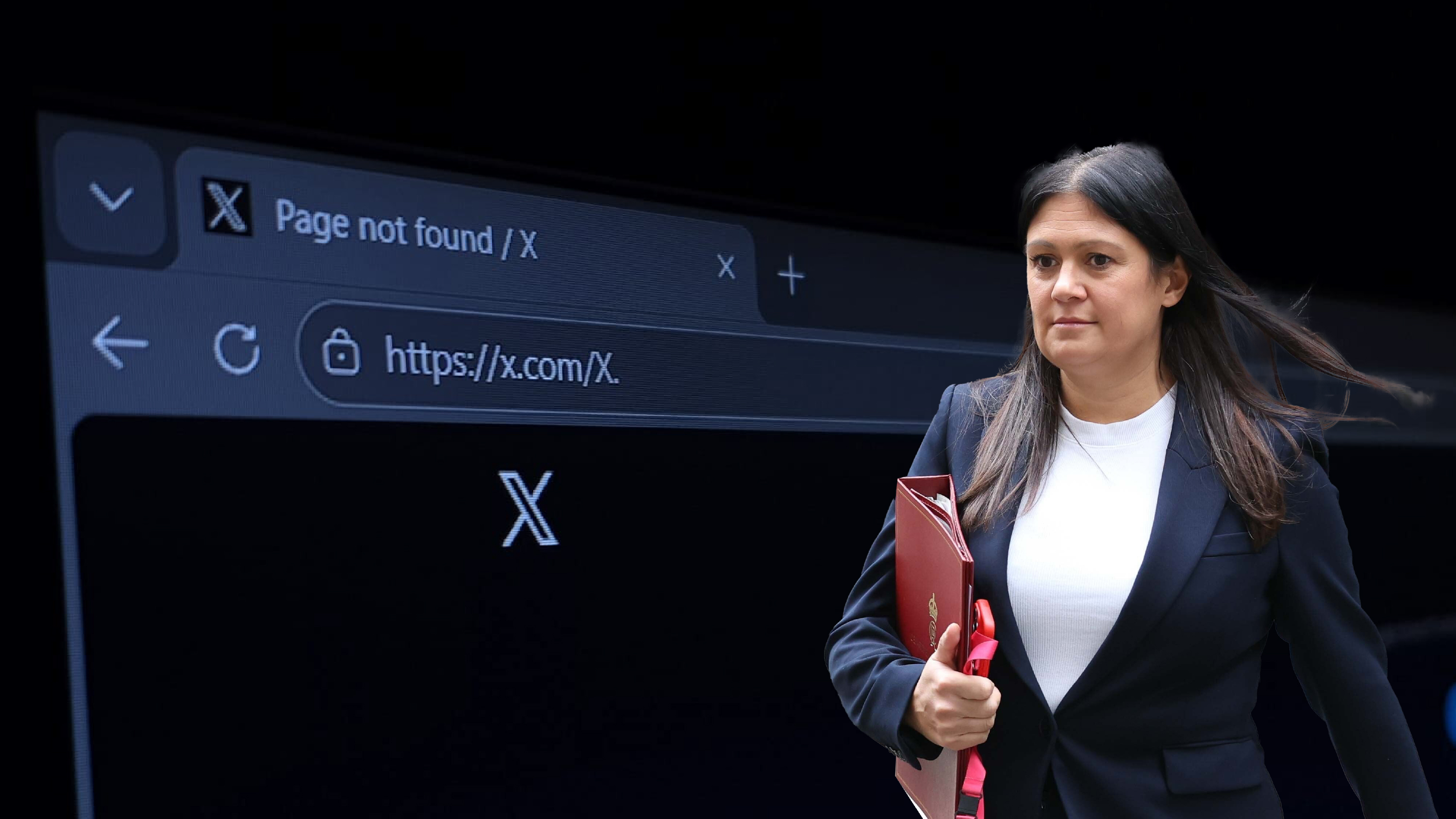
On 2 July, Culture Secretary Lisa Nandy logged off X for good and took her entire department with her. The platform, she declared, now favours ‘abuse and misinformation over meaningful debate’, which she believes is bad for our democracy. Then, in a detail no satirist would dare invent, she posted her farewell with the replies switched off, so that nobody could answer back. The minister in charge of fighting misinformation could not survive contact with a comments section.
Hold that thought.
Eight days before she bolted, her own department had published the plan that made her exit so very telling.
On 23 June, tucked into the usual churn of a British summer, the Department for Culture, Media and Sport published a Green Paper with the faintly menacing title Watch This Space: A new strategic direction for UK media. The consultation closes on 31 August. The government proposes forcing YouTube, Facebook, and TikTok to give ‘prominence’ to public service media: the BBC, ITV, STV, Channel 4, S4C, Channel 5, and, in Whitehall’s slippery phrase, ‘other trustworthy providers’.
Trustworthy. Hold onto that word, because the government is about to make it work harder than anyone at the BBC.
Nandy sold the plan as part of the ‘fierce battle against mis and disinformation’, with ministers pointing at the Southport attacks of 2024 as proof that your feed is a threat to public order. It is a voluntary right, up until the moment it isn’t; the government has already said it will legislate if the platforms decline the invitation. That is the Westminster version of a friendly word: nice algorithm you’ve got there, shame if anything were to happen to it.
Nice algorithm you’ve got there, shame if anything were to happen to it.
So the state must save us from falsehood, and the miracle cure is to bolt the legacy broadcasters to the top of everyone’s feed. One small snag. The trusted outlets have spent five years getting the big stories wrong.
Cast your mind back to 2020. Anyone who suggested COVID might have wandered out of a laboratory in Wuhan was written off as a crank, a racist, or both at once. The BBC folded the lab-leak hypothesis in with the tinfoil brigade, the rest of the press fell in behind, and Facebook purged people for saying it out loud. Three years on, US intelligence, the Department of Energy included, decided a lab leak was the likely origin all along. The ‘misinformation’ turned out to be the right answer, and the referees had spent three years booting the ball into their own net.
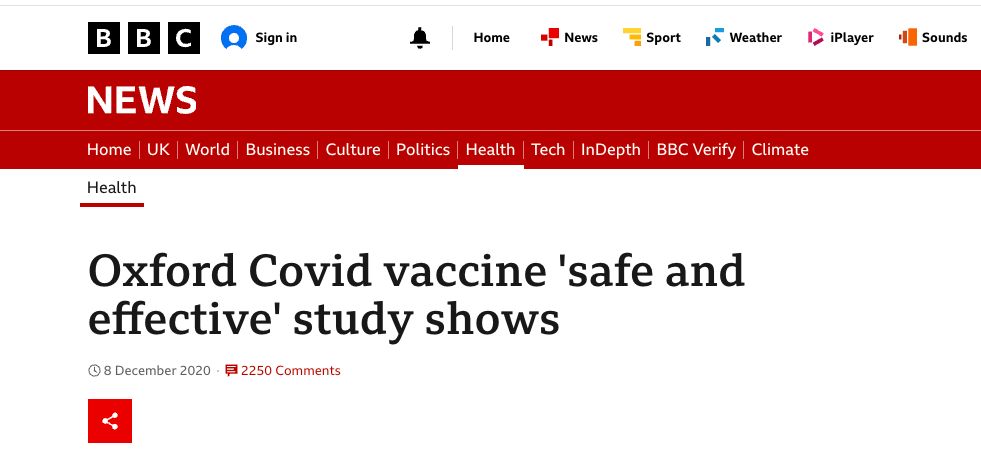
And does anyone remember ‘safe and effective’? Of course you do. It was everywhere, repeated with total confidence by the BBC and the rest: the jabs were safe, effective, and would stop you passing it on. Then the evidence turned up, and the message performed one of the great unannounced retreats in modern public health, quietly reversing from ‘stops transmission’ to ‘reduces severity’ one carefully reworded sentence at a time, until the original promise had evaporated as though nobody had ever made it. Nobody issued a correction. They just stopped saying it and hoped you would forget. These are the institutions the government now wants pinned to the top of your feed, for your own good.
And Southport, the government’s own chosen example? The facts flatten their case. Yes, false claims tore around online, a fake name, an invented backstory, all of it grim. But who set the record straight? Merseyside Police did, through their own statements. And it was a judge, the Recorder of Liverpool, who lifted the reporting restrictions on the suspect on 1 August, saying openly that full reporting would clear up some of the misreporting about who he was. Read that again. The remedy a court reached for was more information, released sooner. The vacuum was the problem, and officialdom had helped dig it. The lesson of Southport is not that the public needs state-approved news piped into its feed. It is that rumour floods into whatever space the institutions leave empty, and the fix is to fill it with facts fast, not to spend two years constructing a visibility regime.
Strip away the soft language and look at the machine itself. A government draws up a list of approved outlets. It stamps them ‘trustworthy’, a label the state alone gets to define. Then it compels the main channels through which people receive information to place those outlets first, which means, by simple arithmetic, placing everyone else lower. Call it whatever you like; it is a licensing regime for visibility. Lenin worked out in 1917 that the first thing to seize was the press, because whoever controls the channel controls what people take to be true. Ours arrives with a consultation deadline and a tasteful green cover, but the instinct underneath is the same: decide which voices the public sees first, and bury the rest for their own protection. This from the same government that spent the same summer deciding what you are allowed to look at online ‘for your safety’. You do start to notice a pattern.
Now follow the money, because this is where it stops being a free-speech seminar and starts emptying people’s bank accounts.
Prominence is a fixed pie. A feed has only so many slots and nobody scrolls to the bottom before their tea goes cold. If the BBC and Channel 4 must sit higher, something else must sit lower. There is no version of this policy where nobody loses reach, however daintily the drafting dodges saying so. So who loses? We don’t have to guess. The government has told us itself. Its own impact assessment for the Media Act 2024 conceded that prioritising public service content would leave non-public-service media worse off, independent creators named outright, because their content ‘may suffer in terms of discoverability’. That is not a critic’s warning. That is the state, in its own paperwork, confessing whose audience it intends to confiscate. Even YouTube has pointed out that mandated prominence overrides what viewers actually choose to watch, and when the platform being regulated is the one standing up for viewer choice, you know the world has flipped on its head.
Think about who these creators are. Many built audiences of hundreds of thousands, some into the millions, from a webcam and a spare room, with no licence fee, no charter, and no distribution deal behind them. They earned every subscriber the hard way, by being worth watching week after week, and a good number of them were asking the awkward questions while the ‘trusted’ outlets were busy fumbling the pandemic. Their reward, under this plan, is to be shoved down the page so that institutions which could not hold that audience on merit can be handed it by decree. It takes a long time for a whale washed up on a beach to rot all the way down to bone, and the legacy broadcasters are somewhere in the middle of that process. This policy props up the carcass and posts the bill to the rest of the beach.
Anyone who has ever bought media knows what comes next. Creators lose reach. The brands that partner with them, and creator partnerships are a serious line in the budget now, not a novelty, watch their return per pound curdle. Sponsorships shrink. The spend gets harder to defend in the Monday meeting. Without passing a single law that so much as mentions advertising, the state quietly guts a whole commercial sector to prop up broadcasters whose viewers have been drifting out the door for a decade.
Two comedians started TRIGGERnometry with a camera in a spare room; it now has more than 1.7 million subscribers, built one viewer at a time over years of turning up and being right often enough to be trusted. The BBC’s answer to competition like that is to have Whitehall allocate it an audience. Good luck to them.
A government that has to force platforms to show you its news has already told you exactly how much you would choose it on your own. Respond to the consultation before 31 August. And keep your attention, and your money, with the people who earned their audience, not the institutions that need a law to make you watch.