






House prices split as North races ahead and South stalls
House prices in the South East grew by just 0.1% between April and June, the weakest rate in Britain, while northern regions surged ahead. Nationwide’s latest figures show the North and North West of England rose 3.9% over the same quarter. Northern Ireland led the country with 8.6% annual growth.
London prices climbed 1.6% in the quarter, with the average home there now worth £540,903. The average South East home costs £341,175. In Northern Ireland the average is £226,699. Nationally, prices rose 2.2% in June compared with the same month last year, to £278,784, according to Nationwide’s June index.
Between May and June, prices did not move at all. Nationwide chief economist Robert Gardner said the market had softened after the Iran conflict pushed up energy prices and interest rates. Mortgage approvals fell noticeably in May.
The mainstream framing points to the Iran war as the cause. That is only half the story. The deeper problem is that the Bank of England spent more than a decade holding interest rates near zero and creating hundreds of billions of pounds out of nothing. That cheap money pumped up house prices far beyond what wages could support. When outside shocks like the Iran conflict push borrowing costs higher, the whole structure wobbles because it was built on borrowed money in the first place. Analysis of the Iran conflict’s impact on UK mortgages confirms the transmission runs through energy prices, gilt yields, and mortgage products.
Ashley Webb, an economist at Capital Economics, said the June stagnation showed that higher mortgage rates continue to weigh on buyers. Capital Economics is a private research firm that sells analysis to City clients.
He has pledged ‘growth in every postcode’ and floated a ‘No 10 North’.
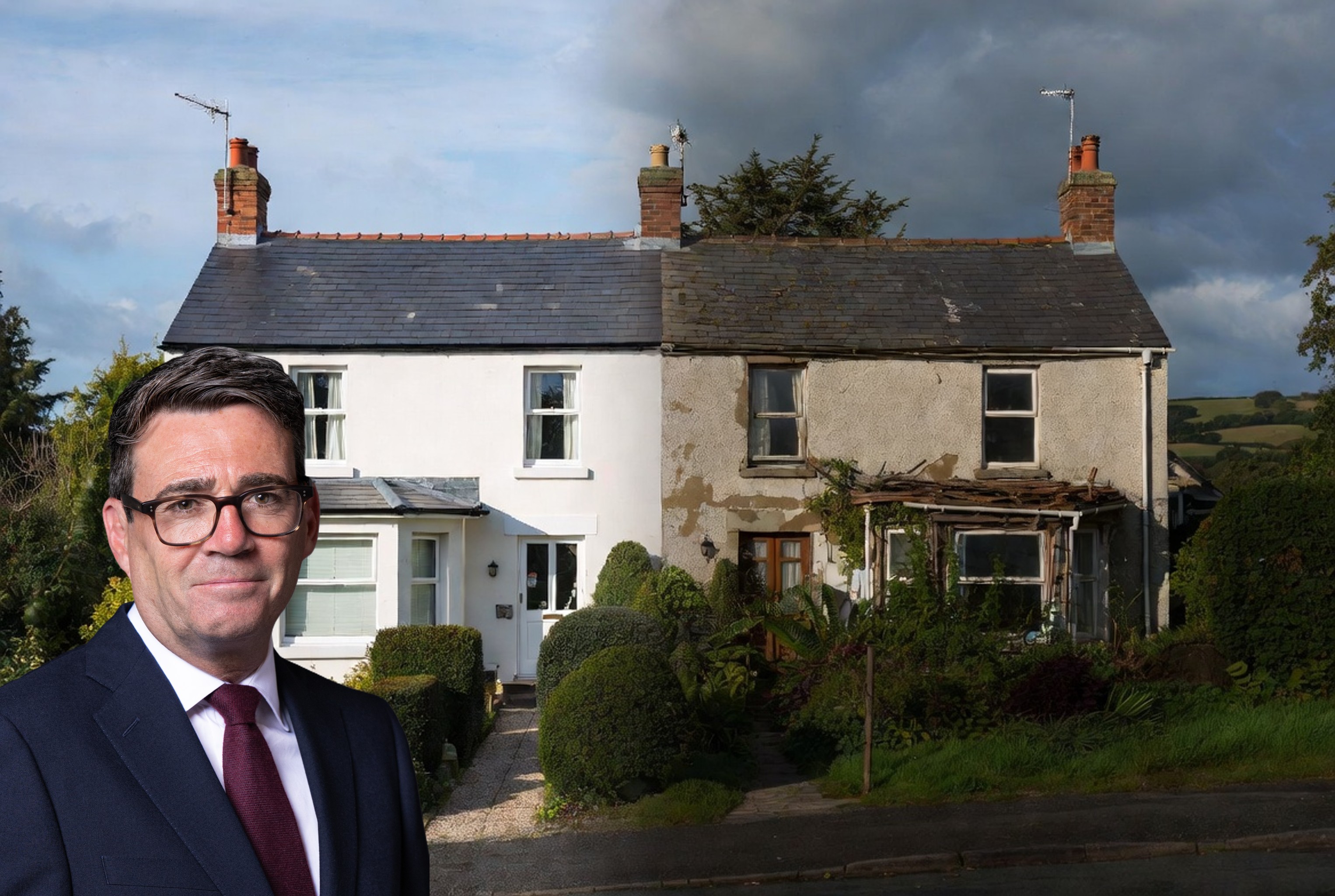
Jonathan Hopper, chief executive of Garrington Property Finders, said Andy Burnham could create a ‘Burnham bounce’ in the North if he becomes prime minister. ‘A huge injection of government spending into the North could accelerate northern price growth further’, he said. Garrington is a private property buying agency that earns fees from investors purchasing homes. It has a direct commercial interest in rising prices.
Burnham, the Mayor of Greater Manchester, is expected to succeed Keir Starmer in the coming weeks. He has pledged ‘growth in every postcode’ and floated a ‘No 10 North’. Politico described the event as a soft launch of his premiership.
Any ‘injection of government spending’ has to come from somewhere. It means more tax, more borrowing, or more money created by the Bank of England. Each of those routes ends with ordinary people paying, through their pay packet, through higher borrowing costs, or through the pound in their pocket buying less.
The pound has already had a rough year. Sterling fell 1.6% against the dollar in the first six months of 2026, its worst start to a year since 2022. Against the euro it rose 1.4% in the quarter to €1.162. Live currency data is tracked on Trading Economics.
The FTSE 100 fell 0.3% while the FTSE 250 rose 0.4%. The yield on 10-year gilts, which sets the cost of government borrowing, rose from 4.76% to 4.8%. Money markets put the chance of a Bank of England rate rise by the end of the year at 83%.
That figure moves daily. If oil prices keep falling, expectations will drop. If the Middle East flares up again, they will rise. What does not change is the underlying position. The Bank of England left rates too low for too long, house prices ran away from wages, and now the country is stuck between rate cuts that would fuel another bubble and rate rises that squeeze homeowners already stretched thin.