






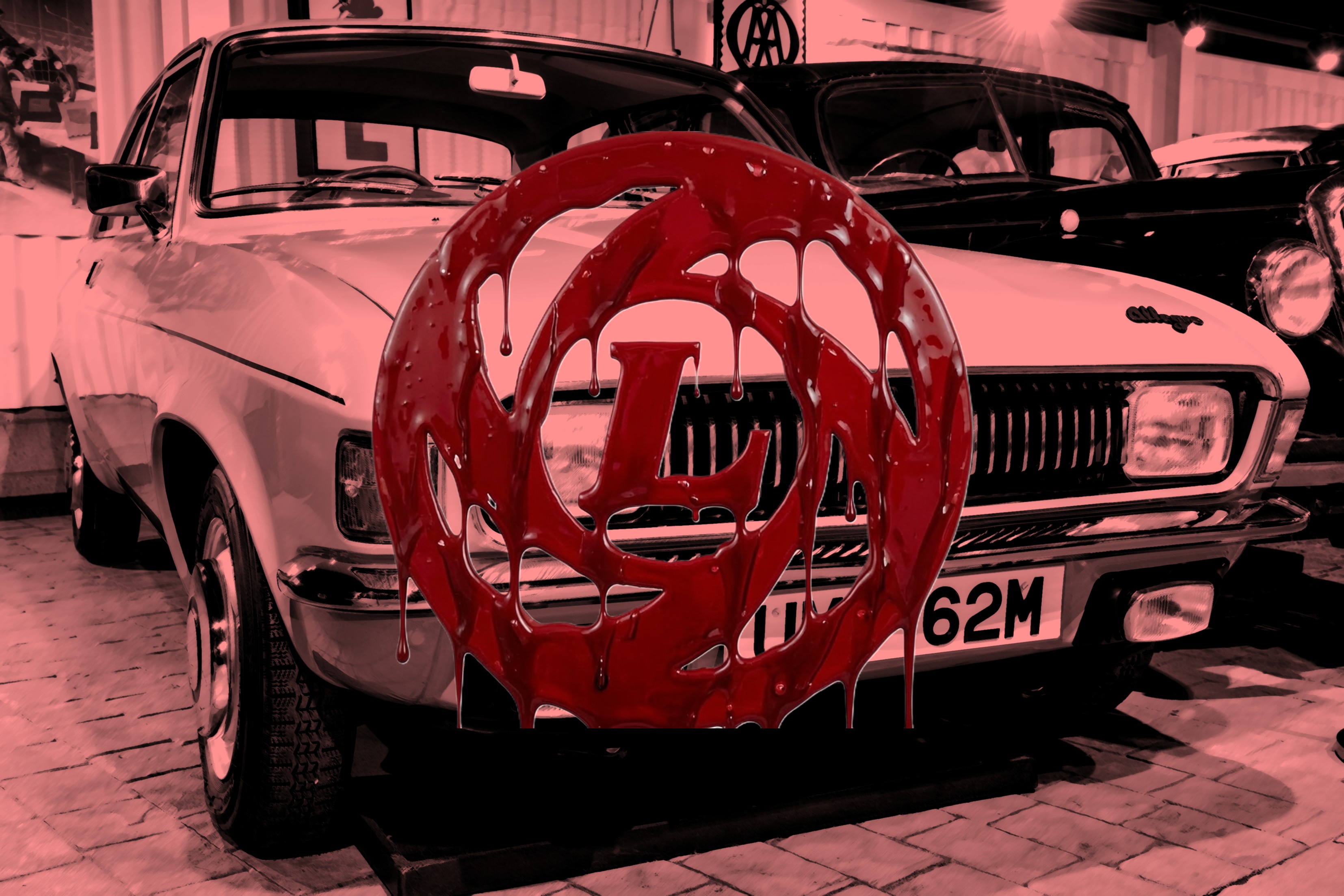

The 1973 Austin Allegro, meant to save British Leyland, became a lasting symbol of 1970s industrial failure
The Austin Allegro has become one of the symbols of everything that was wrong with British Leyland, perhaps even Britain itself, in the Seventies. Billed as the volume-selling saviour of what was then the world’s fourth-largest car manufacturer, this dumpy family saloon, launched in 1973, got off to a bad start from which it never recovered. It leaked, its rear screen popped out if you jacked it up in the wrong place, and for some reason, it had a square steering wheel. What’s more, if you believed everything you read in the Daily Mail, it was thrown together by communists who, if they weren’t on strike, were kipping on the nightshift.
It is a car that seems eternally wrapped up in that grim 70s world of the three-day week and power cuts, rather than the eternally sunny, benign carefree space-hopper riding decade of bad haircuts and flared trousers we are spoonfed by the purveyors of cheap and nostalgic television programmes. It is an easy target for those who want to take a pop at what was bad about British Leyland in the 70s, a time when most popular European family cars were indifferent. Somehow, the Allegro seems to be the only one people remember.
The Allegro was created for an increasingly affluent UK market moving towards bigger cars. Thus, it was to be longer and wider than its top-selling predecessors and offered a much wider range of engines and trim levels; from a poverty spec’ 1100 to the relative opulence of the near 100mph Allegro 1750SS.
Leyland had international sales ambitions for the Allegro – it was launched as BL’s ‘song for Europe’ – with temptations like cloth seats and 5-speed gearboxes.
This ‘car for Europe’ was styled in-house by a young designer called Harris Mann, architect of the Morris Marina and, later, the Leyland Princess and TR7. This, perhaps, was the Allegro’s vital stumble: had it turned out as dashing as the vehicle depicted in Mann’s early concept drawings, buyers might have been more willing to forgive its other faults. Yet, even here, there is room for some revisionist thinking in the Allegro’s defence. As a reaction against the severely cubist European designs of its day – such as the Fiat 128 – was it really that awful? Dumpy and barrel-sided certainly, yet I could think of half a dozen other contemporary saloons that were less harmonious.
One of the cars sillier faults was the sad lack of space between the rear seat and the centre pillar on the four-door version. You had to virtually dislocate your ankle joint in order to get out of the back elegantly; a problem hastily addressed on the Series 2 version in late 1975 by repositioning the rear bulkhead. The last Allegros, actually quite decent cars, were built in 1983.
But what about the square steering wheel? The idea was that the square corners gave you more leverage for parking – a sort of variable rate assistance – and the overall shape allowed a better view of the instruments and more room for your knees. All true in theory but critics, and buyers, hated it, including the police who converted all their Allegro Panda cars to conventional wheels.
And yet there’s a part of me that just knows if the Quartic wheel had appeared on a Citroen, every chin stroking, black-polo-neck wearing designer in the land would have been nodding appreciatively at yet another example of Gallic brilliance.
If the Quartic wheel had appeared on a Citroen, every chin stroking, black-polo-neck wearing designer in the land would have been nodding appreciatively at yet another example of Gallic brilliance.
When you look back at road tests of the car, it’s surprising to find that writers could find relatively little to criticise in the Allegro, particularly in the bigger volume models which were well equipped and usefully undercut the opposition – both domestic and foreign – on price. The real problem with the Allegro is that, although it was an improvement on the old top-selling 1100/1300 range (think John Cleese and the red one he thrashes in Fawlty Towers), it didn’t do anything particularly well by the standards of 1973.
It was as competent and adequate as its predecessor, in its prime, had been outstanding. Worse, there was nothing aspirant about the Allegro either, somehow. Whereas a Cortina suggested cheap glamour, perhaps (even a bit of suburban wife swapping of a Friday evening) the Allegro seemed to come from a more pedestrian world where half a mild down the liberal club would have been the limit of one’s weekly excitement.
Even if the Allegro had been a more inspired design in the Alfasud/ Citroen GS mould, it could never, in truth, have achieved the sales dominance of the old 1100/1300 on its home ground. Not only was it born into a slumping car market thanks to the after effects of the energy crisis, but it was also expected to compete internally. Allegro annual output peaked at 63,369 units in 1975.
We can giggle about the Allegro in these oh so ironic times. But there are hard and sad realities behind its failure concerning people’s jobs and lives. Too much was riding on the car. It was the one model in beleaguered British Leyland’s programme of modern designs that it needed to get absolutely right if it was to face the 70s and 80s with confidence.
Still, I suppose it’s better to be remembered for something rather than nothing. Even if it’s for being crap.