







Moscow’s arms factories run day and night, but sanctions, lost workers, and Ukrainian strikes deep inside Russia are eating the war machine from the inside
Russia produced around 7 million artillery, mortar, and rocket rounds in 2025, 17 times its pre-invasion output, according to Estonian intelligence. Yet Western assessments agree the surge has prolonged the war without bringing Moscow anywhere near victory.
The Estonian Foreign Intelligence Service is a state agency of a NATO member that borders Russia. Its figure sits at the top end of Western estimates, which have ranged from 2 million to 4 million rounds a year.
Soviet factories pulled out of mothballs
Since the full-scale invasion began on 24 February 2022, the Kremlin has ordered defence plants onto three shifts and reactivated Soviet-era production lines, according to a US Congressional Research Service briefing. Tank plants such as Uralvagonzavod and old ammunition factories are running around the clock under direct state orders.
The output is not all home-grown. North Korea has shipped an estimated 5 to 7 million artillery shells since the war began, though deliveries slowed in late 2025, according to analysis by the Modern War Institute at West Point. Iran supplied drones and missiles. China provides dual-use components and microelectronics. Pyongyang has also sent thousands of troops, reported in the Kursk region.
Russian officials claim output of small attack drones rose from a few thousand a month to more than 15,000 a day by mid-2026, figures recorded in open-source tracking of Russia’s arms industry. Those claims come from the Russian state and cannot be independently checked.
Quantity up, quality down
Sanctions have cut off Russia from high-end electronics, precision parts, and advanced machine tools. That has forced reliance on lower-quality substitutes and reverse engineering. Casualties and emigration have drained skilled workers, hitting quality control and innovation.
Russia is pulling T-62s and T-55s, tanks designed in the 1950s and 1960s, out of storage and refurbishing them.
Production of modern tanks and aircraft has hit bottlenecks. Instead, Russia is pulling T-62s and T-55s, tanks designed in the 1950s and 1960s, out of storage and refurbishing them.
The bill that the Kremlin cannot dodge
Defence swallowed an estimated 7.3% to 7.8% of Russian GDP in 2025, according to analysis by German researcher Janis Kluge, with roughly 6.3% planned for 2026. Every rouble spent on shells is a rouble taken from ordinary Russians through tax, borrowing, or a rouble that buys less. The result is exactly what you would expect: labour shortages in civilian industries, rising prices, and a civilian economy left to stagnate while defence hubs overheat, according to the Atlantic Council’s assessment of the Russian economy. The Atlantic Council is a US think tank funded by Western governments, corporations, and foundations, including NATO member states.
Ukraine is hitting the factories directly
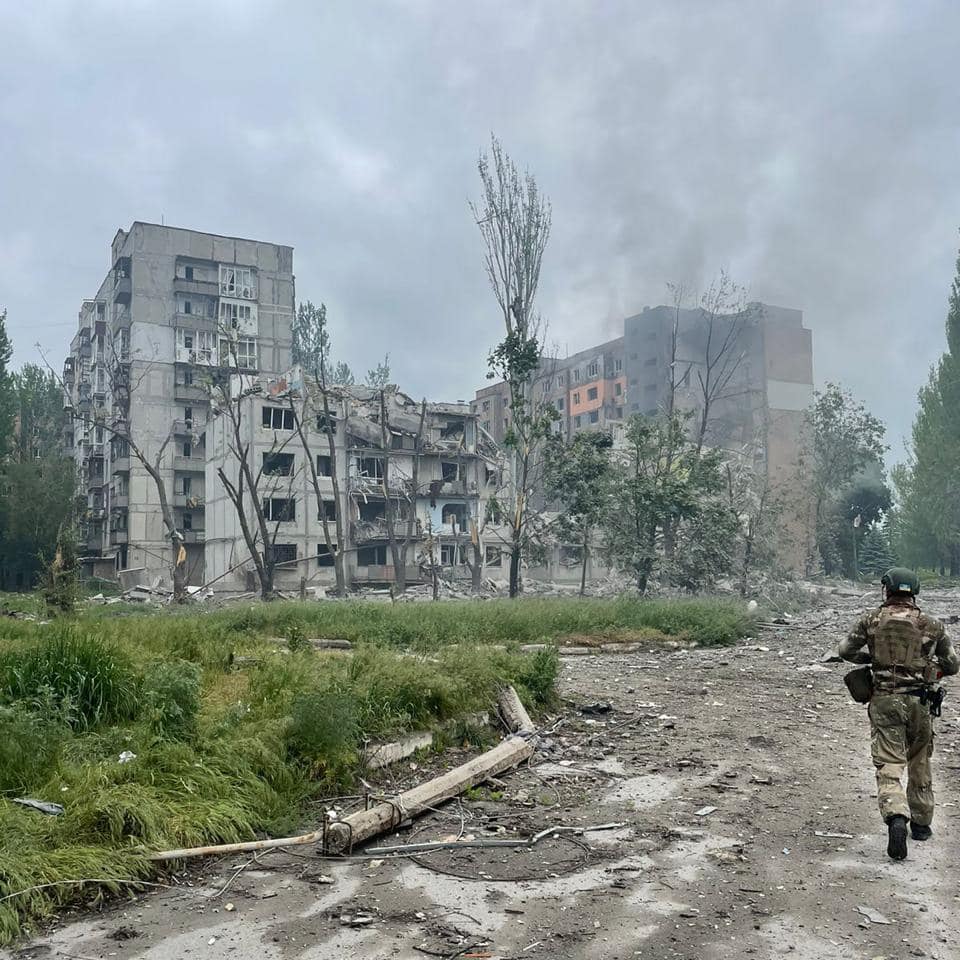
Russia’s industrial surge faces a direct counter. Ukraine has mounted a long-range strike campaign against Russian oil refineries, missile factories, airbases, and logistics hubs, using Western-supplied and domestically built weapons. Ukraine’s military says the campaign flew 2,359 deep-strike missions in June 2026 alone, a claim that cannot be fully verified.
American-supplied air defences and long-range munitions have raised the cost of every Russian operation. Refinery strikes have cut Russian fuel-processing capacity.
There are signs that the boom itself is fading. The Moscow Times reported in December 2025 that growth in the defence sector may have peaked, with wage cuts and hiring slowdowns at some arms firms. The question for the rest of 2026 is whether Moscow can keep the factories running faster than Ukraine can hit them.