




One of only three surviving Union Flags from the 1805 battle has been saved from export after a £700,000 campaign
A Union Flag flown at the Battle of Trafalgar will stay in Britain after a fundraising campaign, and will go on permanent display in Newcastle.
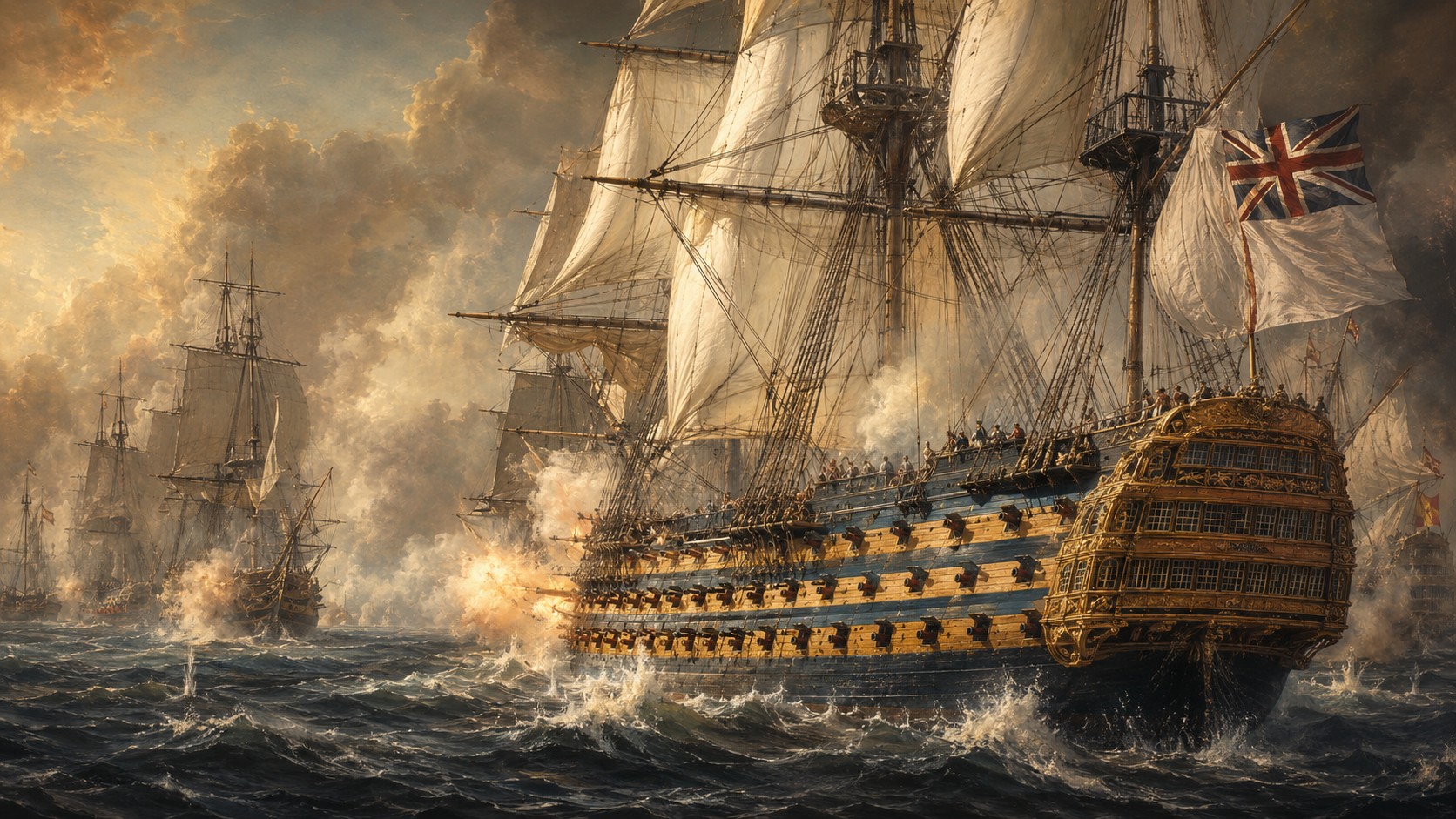
The flag flew from HMS Royal Sovereign, the flagship of Vice-Admiral Cuthbert Collingwood, Nelson’s second-in-command, on 21 October 1805. It is one of only three Union Flags known to have survived the battle, according to the Museums Association.
The flag had been due to be sold abroad. The government placed a temporary export bar on it in December 2025 to give a British buyer time to raise the money.
North East Museums confirmed on 6 August 2026 that it had bought the flag for £450,000. It will become the centrepiece of a new display at the Discovery Museum in Newcastle, the city where Collingwood was born in 1748.
The flag was hand-stitched in wool bunting and measures roughly 5ft by 9ft. It carries gunpowder stains, splinter tears, and burn marks from the battle, but remains in good condition.
Taken home by a 17-year-old sailor
The flag survived because Charles Aubrey Antram, a 17-year-old master’s mate on Royal Sovereign, kept it as a souvenir after the battle. It passed down through his family for generations before entering a private collection.
Around 500 sailors from the Tyne and Wear area are believed to have fought at Trafalgar, many of them aboard Royal Sovereign. Collingwood called his Tyneside crewmen his ‘Tars of the Tyne’.
Susan Collingwood-Cameron, Collingwood’s great-great-great-niece, said: ‘This flag is said to have been made by sailors on board the ship, many of whom came from Tyneside. It will be a tribute to them, and the important role they played, in one of our greatest moments in history. There may well be descendants of their families still living in the area.’
Royal Sovereign led the British line into the enemy fleet at Trafalgar. Collingwood took overall command after Nelson was killed, and the victory ended Napoleon’s immediate threat of invading Britain.
Who paid to save it
The total fundraising target is £700,000: £450,000 for the flag itself and a further £250,000 to transport, conserve, and display it. North East Museums has raised more than two-thirds of that sum and has launched a public crowdfunding appeal for the rest, with donations match-funded by the Sir James Knott Trust.
The largest single contribution was a £400,000 grant from the National Heritage Memorial Fund. The fund is paid for by central government, receiving roughly £5 million a year in recent years as a ‘fund of last resort’ for heritage at risk. North East Museums itself is supported by local councils and Arts Council England, with its charitable trust raising around £551,000 a year from donors.
Collingwood is a popular figure in the North East, but perhaps isn’t given the national hero status that he and his crew deserve. — Keith Merrin
Other backers include XTX Markets, the Drapers’ Charitable Fund, the Community Foundation North East, and the Collingwood family themselves.
Keith Merrin, director of North East Museums, said: ‘Collingwood is a popular figure in the North East, but perhaps isn’t given the national hero status that he and his crew deserve.’
Simon Thurley, chairman of the National Heritage Memorial Fund, called the flag ‘an extraordinary survivor of one of the most significant moments in UK naval history’.
Fundraising continues for the permanent display at the Discovery Museum, which draws hundreds of thousands of visitors each year.