




The family car outdrove everything until the brown cancer ate it alive
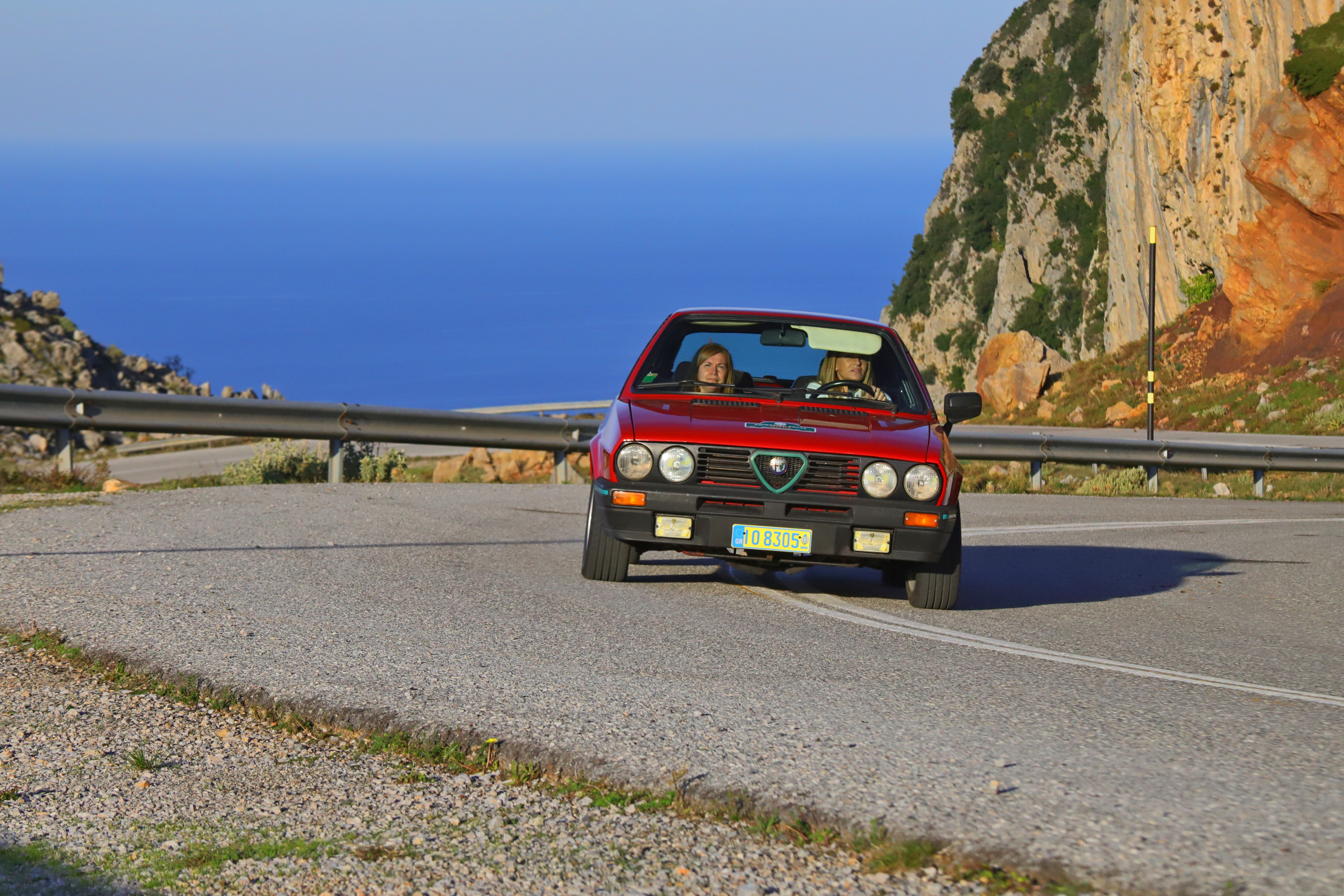
Expertly packaged and uncompromisingly engineered, the Alfa Romeo Alfasud was an enigmatic Italian family saloon for the seventies that set standards of road behaviour, refinement, and driver appeal that rivals were still struggling to match in the early eighties.
For a car under 13ft long, the Alfasud had a huge boot, and more rear leg room than a Jaguar. It could take four full-sized people while at the same time incorporating safety features that had not been an issue a decade previously.
With a total production of 1.1 million, the Alfasud (‘Sud’ was a reference to the car’s southern origins not far from Naples) was the biggest selling Alfa Romeo of all. Yet it has become a tragic shorthand for the epic rust problems and shoddy build quality that gave Italian cars their ‘rust bucket’ reputation.
The strife, political machinations, and sense of missed opportunity that surrounds this flawed prodigy of a car only adds to the romance. It was an Alfa that blue-collar buyers could aspire to in a sector of the market where the rewards were greater, as were the risks.
Much was riding on its success in 1971, measured against ruthlessly costed Fords and Fiats. It was an open secret that plans for a true baby Alfa had been around since the fifties; only a gentleman’s agreement not to step on Fiat’s toes in the volume car business had kept the idea on the back burner.
As of the Sud’s Turin show launch in 1971 all such bets were off. With its slippery four door, two-box body by the newly formed ItalDesign consultancy, and a drive train by the Austrian Engineer Rudolf Hruska, the Alfasud must have had Fiat rattled. For Hruska, the Alfasud was the crowning achievement in a career that included work with Porsche on the pre-war VW’s, and latterly Fiat (on the 128).
The cars were four-door only at first. The Sud’s lack of a rear hatch and folding seats was not quite so puzzling in the early 70s when cars such as the hatchback-shaped Citroen GS/CX and Lancia Beta also did without third or fifth doors.
The decision to build the new small Alfa Romeo in an impoverished part of southern Italy - where the job options tended to range between farming and crime, with not much in between - must have had a certain logic to it when the idea was plotted in the late sixties. In fact, because of the massive investment required, a new company was formed to build the cars, 90% owned by Alfa and 10% by the financial arm of the Italian government’s industrial reconstruction agency.
Carmaking and government intervention rarely goes well, although the idea came from Alfa rather than being an entirely political move. Enquiries with the British Rootes Group about the fortunes of the Scottish-built Hillman Imp might have given Alfa bosses cause to question the wisdom of entrusting the construction of an all-new car in an all-new factory to an essentially rural peasant workforce. The factory would be plagued by strikes or, at harvest time, by employees who went mysteriously sick. So much for social engineering. Luckily, it was Alfa rather than government do-gooders who designed the car.
Front drive and Alfa’s first rack and pinion steering were the engineering headline grabbers, and the handling, even by modern standards, was superb. One of the keys to this was its horizontally opposed four-cylinder engine, slung well forward of the front wheels to give a low-profile nose. It was designed for easy maintenance and long life, a nod to the fact that this was a mass-market car aimed at buyers less well-heeled than the traditional Alfa constituency.
These early Alfasud’s were given a rapturous welcome. Smooth, quiet, thrifty, and spacious, it seemed to be a family car dream come true, which, at £1400 when the first examples arrived in the UK in 1973, blew its rivals out of the water.
Like white dog poo you just don’t see them anymore, although the Sud is, presumably, a much more welcome sight.
Sadly, you cannot talk about the Alfasud for long before the subject of the dreaded brown cancer comes up; pre delivery they needed paint repairs and most Sud’s had new sills at their first MOT unless they were rustproofed from new. It was not an issue with the quality of the steel. Poor working practices at the factory - where raw shells would end up getting stored outside or left to gather condensation while strikes and walk-outs were resolved – seem to have been at the root of the Sud’s rust problems. However, towards the end of the seventies things improved: post 1980 Sud’s are better-built cars.
Alfasuds in 2026 feel modern and capable. Few allowances or recalibrations have to be made in this new chapter in terms of what people’s expectations of what a family car can be. There was a touch of genius about this little saloon that no subsequent Alfa Romeo has managed to recapture; a mystique that fully lived up to the marques reputation as a maker of great drivers cars, perhaps even enhanced it. The sad part is that good Alfasuds, or even bad ones, are incredibly hard to find; fewer than eighty are currently accounted for on UK roads. Like white dog poo you just don’t see them anymore, although the Sud is, presumably, a much more welcome sight.