







A court ruling and viral TikTok videos drove the biggest single migrant rush in EU history
Around 60,000 illegal migrants crossed from Morocco into the Spanish city of Ceuta in 48 hours on 30 and 31 July. It is the biggest single migrant rush in EU history. At least 72 people died, most by drowning or being crushed at the border, Reuters reported.
Ceuta’s local government put the number of crossings at about 60,000. Spain’s Interior Ministry gave a lower figure of around 50,000. Either way, the total is roughly 70% of the city’s normal population arriving in two days.
The Spanish government put the death toll at 67 by 1 August, according to WDAM. Reuters later reported 72 as more bodies were recovered. Some estimates linking deaths on the Moroccan side put the total as high as 111.
Swimmers, a fence, and a court ruling
Those who crossed were predominantly young Moroccan men. Most set off from the beaches of Fnideq and swam around the sea barriers using flippers and rubber rings. Others forced their way past the 10m land fence.
The trigger was a Spanish Supreme Court ruling last month. The court decided that migrants intercepted at sea trying to reach Ceuta could not be immediately returned. Fast-track removals apply only to those who breach the land fence, CNN reported.
That narrow ruling was twisted online. Viral TikTok, Instagram, and Facebook posts claimed the border was open. Spanish officials blamed people smugglers for spreading the false claims, according to Reuters.
Most went straight back
By Friday evening, about 48,300 of those who crossed had returned to Morocco, the Spanish Interior Ministry said. Many self-returned once they realised Ceuta offered no route onward. The city is not part of the Schengen free-travel zone, so arriving there gives no right to reach mainland Spain or the rest of Europe. A senior EU official confirmed no significant onward movement was detected.
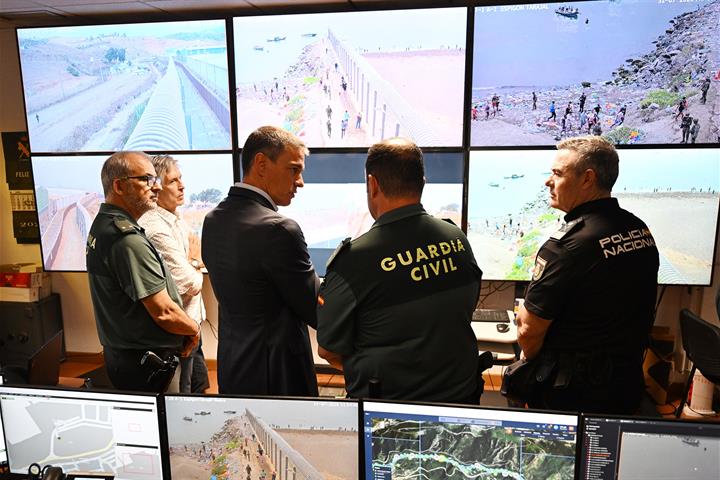
The rush still overwhelmed the city. Shops shut, bread ran short, and the annual fiestas were cancelled. Prime Minister Pedro Sánchez, who faces elections next year, flew to Ceuta on Friday and was met with insults from protesters. Madrid sent troops, police, divers, drones, and boats. Spain has since installed a 500m sea barrier at the border, PBS reported.
Europe turns on Madrid
Italian Prime Minister Giorgia Meloni suspended free movement with Spain, reintroducing checks on air and sea arrivals for one month, Al Jazeera reported. Denmark and Finland backed calls to consider suspending Spain from Schengen. Some 22 EU leaders signed a letter criticising Spanish migration policy, according to Politico. French President Emmanuel Macron ordered strengthened checks at France’s border with Spain.
US President Donald Trump attacked Spain’s handling of the crisis at a cabinet meeting at Camp David, calling it ‘an invasion’.
The displacement of such a large number of people could not have taken place without the Moroccan authorities knowing about it in advance’ — Haizam Amirah Fernández
The crisis lands two weeks after Gibraltar removed its border checkpoints with Spain on 15 July, when its Brexit deal took effect, Al Jazeera reported. Gibraltar’s government has urged calm.
Did Morocco let it happen?
Haizam Amirah Fernández, director of the Centre for Contemporary Arab Studies in Madrid, said the movement ‘could not have taken place without the Moroccan authorities knowing about it in advance’. Amirah Fernández previously worked at the Elcano Royal Institute think-tank.
In 2021, around 8,000 people crossed into Ceuta during a dispute between Rabat and Madrid over Western Sahara. Spanish officials played down claims of Moroccan involvement, and Sánchez thanked Rabat for its cooperation on returns. The Telegraph’s original report led on unnamed ‘Western intelligence sources’ claiming Morocco facilitated the crossings; that claim remains unverified, and both governments have pointed instead to smugglers and social media.
EU emergency talks are now underway, with the focus shifting to external border security and anti-smuggling operations.