







Ukraine destroys another of Russia’s Cold War bombers
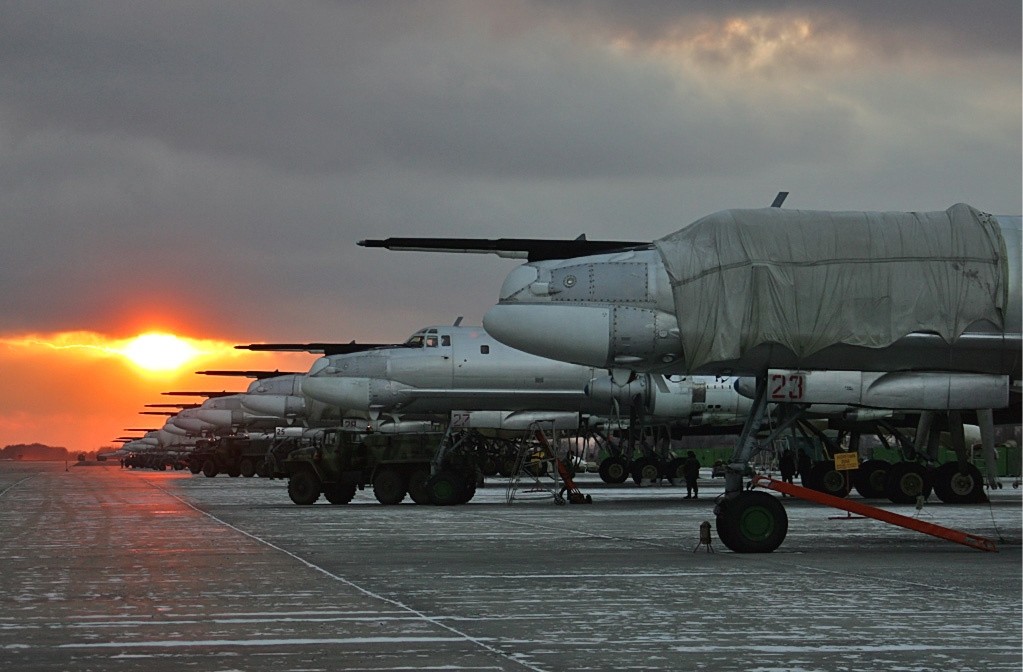
Ukraine has knocked out another of Russia’s nuclear-capable Tu-95 bombers in a drone strike deep inside Russian territory. The attack on Engels airbase in Saratov Oblast this month left the aircraft critically damaged, with its tail section severed.
Ukraine’s SBU security service carried out the strike, the Kyiv Independent reported. Engels has been hit repeatedly since December 2022, along with Dyagilevo airbase and aircraft repair facilities elsewhere in Russia.
Russia’s shrinking bomber fleet
The Tu-95, known to NATO as the Bear, first flew in 1952. Russia has used the bombers throughout the war to launch Kh-101 cruise missiles at Ukrainian targets. They usually fire from standoff range inside Russian airspace to stay out of reach.
Open-source estimates put the total fleet at 40 to 60 airframes. Fewer than half are mission-capable at any one time. Every strike chips away at an ageing fleet Russia cannot quickly rebuild.
More than 300 strikes on Russian oil
The bomber attack is part of a much wider campaign. Ukraine has hit Russian oil facilities more than 300 times since the full-scale invasion began on 24 February 2022, with more than 120 strikes in 2025 alone.
Those attacks have knocked out refining capacity, caused fuel shortages and rationing in parts of Russia, and inflicted billions in damage, according to open-source tracking of the 2025 to 2026 Russian fuel crisis. The strikes have continued into 2026.
Nine in ten drones shot down
Ukraine’s air defences are holding. Western-supplied systems including Patriot, NASAMS, and IRIS-T, working alongside cheaper interceptor drones, neutralised more than 90% of Shahed-type attack drones in recent mass raids, RBC-Ukraine reported. Intercept rates against cruise and ballistic missiles are lower but still substantial.
No sign of a shift to carpet bombing
Some analysts have asked whether mounting losses could push Moscow towards heavier, indiscriminate bombing of Ukrainian cities. There is no evidence of that so far.
Every strike chips away at an ageing fleet Russia cannot quickly rebuild.
Russia’s air campaign still relies on glide bombs, FAB-series weapons fitted with UMPK guidance kits, alongside Iskander, Kalibr, and Kh-101 missiles. Large-scale area bombing with unguided munitions is not part of its current approach. Russia also retains the world’s largest nuclear arsenal, which shapes every Western calculation about how the war might escalate.
What the war has cost American taxpayers
None of this comes cheap for the West. Total US spending related to the war reached about $195 (£146) billion by March 2026, according to figures compiled by the Council on Foreign Relations. Roughly $127 (£95) billion of that directly supported Ukraine, making America by far the largest single contributor.
That $195 billion is not free money. It comes from American taxpayers, taken in tax now or borrowed against their earnings later.
Ukrainian strikes on Russian airbases and energy infrastructure have continued into 2026. Western aid continues too, though volumes and political support vary from country to country.