







China sent 3,615 warplanes into Taiwan’s defence zone last year and the number is still rising
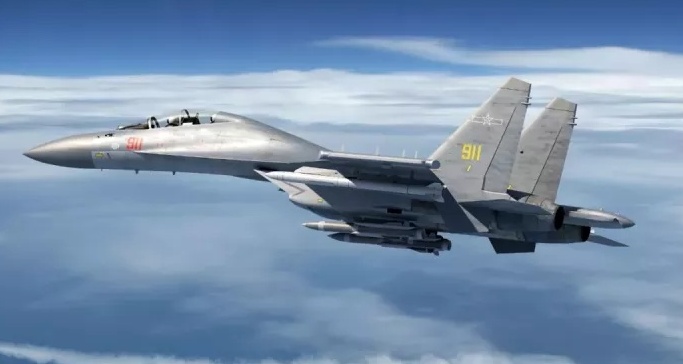
Chinese warplanes entered Taiwan’s air defence zone more than 4,000 times in the first nine months of 2025, according to Taiwan’s Ministry of National Defence. That came after a record 3,615 incursions in 2024, and the pace has continued into 2026, with 261 sorties recorded in July alone.
The flights are one part of a sustained Chinese pressure campaign around the island. Beijing staged two large military exercises in 2025, named Strait Thunder-2025A in April and Justice Mission in December, with further live-fire drills in July 2026.
Coastguard ships circling the outlying islands
China Coast Guard vessels entered restricted waters around Taiwan’s outlying islands of Kinmen, Matsu, and Dongsha at least 15 times between January and March 2026, Taiwan’s coastguard reports. One standoff near Dongsha in May 2026 lasted more than 30 hours.
Analysts at the Soufan Center say the aim is to make constant pressure feel normal and to test Taiwan’s responses without starting a war. The same reporting recorded a 60% rise in Chinese disinformation aimed at Taiwan in 2024.
China uses near-identical tactics against the Philippines in the South China Sea, where its coastguard vessels harass Filipino ships in disputed waters. The pattern is the same: pressure applied just below the level that would trigger open conflict.
What the 2027 date actually means
The Pentagon’s latest report on the Chinese military says the People’s Liberation Army is working towards 2027 modernisation goals that include the capability to take Taiwan by force. Much coverage of the date presents it as an invasion deadline. US assessments describe it as a capability benchmark, not a decision to attack, and recent American intelligence does not point to an imminent invasion.
Beijing’s official position has not changed. It insists on eventual unification with Taiwan under its terms and has never ruled out using force. President Trump and Xi Jinping discussed Taiwan at their 2025 and 2026 meetings, and US officials said afterwards that American policy had not changed.
Record arms sales, slow deliveries
Washington approved an $11.1 billion (c.£8.2 billion) arms package for Taiwan in December 2025, the largest on record, and a further $14 billion (£10.4 billion) package is under review. Deliveries lag well behind approvals, with a substantial backlog of ordered equipment still outstanding as of April 2026. Taiwan completed delivery of its American Abrams tanks in 2026.
Any conflict in the strait would choke global supply for years and push up the price of almost everything with a chip in it.
In June 2026, a senior US diplomat said arms sales to Taiwan do not depend on China’s approval.
Why the chips matter to Britain
Taiwan’s TSMC makes about 72% of the world’s outsourced computer chips, including most of the advanced chips that go into cars, phones, and defence equipment. Any conflict in the strait would choke global supply for years and push up the price of almost everything with a chip in it, from cars to washing machines.
What Taiwanese people want
Polling commissioned by Taiwan’s Mainland Affairs Council in December 2025 found about 85% of Taiwanese support keeping the current arrangement, neither declaring formal independence nor unifying with China. Taiwan held a peaceful presidential transition in 2024 and continues to rank among the world’s strongest democracies on international indices.
The $14 billion (c.£10.4 billion) American arms package now awaits a decision in Washington. Chinese air and sea activity around Taiwan remains at elevated levels, with no sign of easing.